Everyone knows that exercise is an effective means of promoting longevity, disease prevention, and metabolic health. It can reduce your blood pressure, enhance cardiovascular function, and extend your life. But as you grow older, your body undergoes changes that traditional exercise programs can’t reverse.
The fitness industry tells women that as they get older, they should simply do more cardio and lift very light weights to tone their bodies. But studies show that endless hours on a treadmill will not stop the biological process of muscle loss, required to protect your aging bones and metabolism.
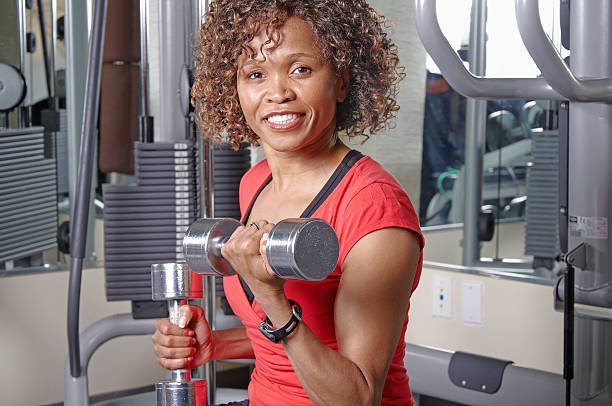
If you really want to take care of your health, you have to lift heavy weights. Strength training for women over 40 is not a trendy athletic activity anymore. It’s your most important tool for controlling your aging process.
Why is Strength Training Important for Women?
It is a form of physical activity that involves the use of external resistance, such as dumbbells, barbells, resistance bands, or body weight, to create resistance against which muscles must work. This is the type of tension that prompts your body to develop strong, dense muscle tissue. To understand why you need to change your workout routine, you first need to understand exactly what happens to a woman’s body as she moves to 40.
1. Reversing Sarcopenia
Sarcopenia is a medical term for age-related muscle loss. Women begin to lose 3% to 8% of their muscle mass each decade after about age 30.
This loss can accelerate after age 40, which is caused by hormonal changes. Muscle tissue is metabolically active tissue, which means that it continues to burn calories all the time, even when you are not using it. As you lose muscle mass, your BMR decreases, which means you burn fewer calories sitting around. This is the main reason for the stubborn belly fat that occurs in middle age. Strength training slows down sarcopenia and reverses it. So, it is never too late to gain lean mass in the 40s, 50s, 60s, and beyond
2. Protecting Bone Density
Bone is not static, yet it is affected by the force exerted on it. Women are at a significantly higher risk for osteopenia and osteoporosis than men, especially as they enter perimenopause and menopause.
During weight lifting, the stress of the weight triggers the osteoblasts (bone-forming cells) to create more bone. One of the most important studies on bone density and exercise in women found significant, measurable gains in spine and hip bone density in women who trained with heavy loads at 80–85% of their maximum.
Estrogen is a huge contributor to keeping your bones healthy because it helps cells that develop bone. As you age, estrogen levels go down naturally, and more bones start to dissolve than are being formed, making your bones weak and porous.
3. Hormonal Balance
Strength training can have a significant systemic impact on hormones. It makes your cells more sensitive to insulin, which means they are very responsive to insulin. This will help your body to use carbohydrates properly and store them as fuel in your muscles, not around your organs.
Also, weight lifting triggers the production of growth hormone and helps control cortisol. Studies have continually demonstrated that consistent strength training can help to control cortisol levels and boost endorphins. This eases anxiety, depression, and mood swings that commonly occur in women over 40.
4. Promoting Longevity and Cognitive Function
Strength training has become more than fitness advice. It’s making its way into longevity research as one of the most reliable predictors of health span.
There is a consistent association between muscle mass and functional strength in midlife and later life. This reduces the risk of cardiovascular disease, diabetes, dementia, depression, and mortality from all causes.
Strength training can help prevent common midlife complaints, and research continually shows that strength training is perfect for boosting cognitive function and longevity.
How Often Should Women Do Strength Training?
If you choose to begin weight training, you must have a proven and systematic program. One of the typical errors is believing that more is better. But you need to understand that your body doesn’t make muscle in the gym. It actually makes muscle when your body is at rest.
The number of strength training sessions for women should be 2 to 4 times per week. Two full-body sessions per week are ideal if you’re new to training to promote adaptation while keeping your nervous system from getting overloaded. For a higher level, you can train 3-4 days per week, alternating between upper and lower body days.
It’s important to rest between sessions. Wait at least 48 hours between workouts that train the same muscle groups. Most women can see improvement in their strength after two sessions of strength training per week, for 30 to 45 minutes per session, within 8 to 12 weeks.
That’s why full-body training 2-3 times a week is effective for most women.
Best Strength Training Exercises for Women Over 40
The best strength training exercises for women are compound exercises, which target more than one muscle at a time.
These are more effective and can burn more calories than single-movement workouts such as bicep curls or leg extensions. These exercises simulate actual human movements, promote functional strength, and can burn more calories.
1. The Deadlift
The deadlift is likely one of the most crucial exercises out there for women aged 40 and above.
The muscles on the back of your body. like your glutes, hamstrings, and lower back, are often the weakest link in modern women. The deadlift is ideal for strengthening the posterior chain.
One of the first exercises you should perform is the dumbbell Romanian Deadlift (RDL) with a straight spine and pushing your hips back. It reflects picking something up off the floor, so it is a true-life translation.
This exercise is crucial to building the back muscles that support your lower back and to avoid the crippling back pain that often attacks women during midlife.
2. Push-ups and Chest Presses
Women naturally have less upper-body muscle mass than men, and this area is often completely neglected. This isn’t something to be overlooked. Push-ups are a fantastic workout for the chest, shoulders, and core stability.
If you are unable to do a full push-up from the floor, you should begin by having your hands elevated on a solid bench or counter.
The dumbbell chest press while lying on a bench and pressing the dumbbells upwards is a great alternative, which lets you gradually increase the load safely.
3. Rows and Pull-downs
In today’s world, where sitting for long periods in front of a phone or computer seems to be a way of life, the majority of women find themselves with rounded shoulders and weak back muscles. This can be directly addressed by rowing movements.
A dumbbell row, cable row, or band row works the muscles of the upper and mid-back, which move your shoulders backward, open your chest, and counteract the forward rounding that occurs after many years at a desk.
If you are having pain in the upper back at the end of the day, you need to be doing more rows than stretching.
4. Loaded Carries
You should stop doing hundreds of crunches. They’re time-consuming and actually bad for your aging spine. Rather, train your core with functional training.
One of the best exercises to do is the farmer’s carry. All you do is grab a heavy dumbbell or kettlebell in each hand and start walking for 30-60 seconds. This engages the entire core, hip, and stabilizing muscles to hold you upright, creating a bulletproof midsection that helps to support your spine in your day-to-day activities.
5. Step-Ups and Lunges
Single-leg exercises can include lunges, step-ups on a bench or box, and split squats. These exercises challenge balance and unilateral strength that bilateral squats cannot. They increase the stability needed to avoid falling and strengthen each leg separately. This helps to activate the hip flexor muscles in a functional range that is directly applicable to walking, climbing stairs, and remaining agile in your later years.
6. The Overhead Press
By pushing a weight overhead, you are training your core, upper back, and shoulders. It’s one of the top functional upper-body strength exercises.
It is also a motion that women do not want to make out of hesitation. A dumbbell shoulder press (seated or standing) is a great place for you to begin.
Progressive Overload and Strength Training
You cannot lift the same amount of weight over several months and expect your body to change.
Your body needs to constantly put pressure on your nervous system to develop new muscles and enhance the strength of bones. This natural biological process is referred to as progressive overload.
You need to try to make your exercises a little bit harder every one to two weeks. It means that you have to add 2.5 pounds to your weights, complete one repetition more than you completed previously.
If it becomes easy for you to do the exercise, it no longer gives enough stress to your body and muscles and, therefore, does not lead to positive changes.
Common Mistakes to Avoid When Strength Training
In order to make sure your training is safe and effective, here are some mistakes that you need to avoid:
1. Using Dumbbells That Are Too Light
The main reason why most women use lightweight dumbbells is that they want to avoid becoming too bulky or too strong. Well, as a woman, you do not have enough testosterone to get bulky muscles anyway.
When you lift light dumbbells for 20 reps, you will only be building muscular endurance, not muscle strength. Your goal is to choose dumbbells that feel heavier so that your last 3 to 4 reps will be very challenging.
2. Neglecting Warm-up Routine
With aging, connective tissues become less elastic and more susceptible to injury.
You should not enter the gym and begin weight lifting right away. It is recommended to warm up by doing dynamic stretches such as arm rotations, leg swings, and body squats for about 5–10 minutes to provide additional blood circulation and to activate the nervous system for the upcoming stress.
3. Ignoring Joint Pain
Never ignore any joint pain when exercising. Muscle pain at the start can be considered healthy because it is the body’s response to a good training routine. But joint pain is not normal, especially for the knees, shoulders, or back.
If a movement causes joint pain, you should stop immediately, assess your form, and consider modifying the exercise to protect your joints.
Conclusion
Every woman should take up strength training since it is the only method that is scientifically proven to actually counteract muscle loss and prevent severe bone loss.
But be realistic, since no miracles can happen during the first two weeks of your strength training. Your body needs time, dedication, and patience to develop and increase muscle mass.
In addition to strength training for women, your diet supplies building materials for your muscle tissue. Any female over 40 should take 0.7 to 1 grams of protein per pound of her desired body weight daily. This way, you make sure that your body gets all the materials needed for building muscle mass.
In case you suffer from a health problem such as osteoporosis or joint pain, working with your provider can be beneficial.
At Kairos Health, Lola, one of our functional nurse practitioners, is here to examine your health, help you plan the right exercise routine, and guide you safely through this transition. So you can build a strong, capable body for the rest of your life.