Are you looking to start seed cycling for hormone balance? It has become very popular on social media as an easy, natural, and soft method to fix PMS, control periods, and get rid of hormonal acne. However, real nutritional science lies behind your fancy smoothie bowls.
The hormones in women are chemical messengers, and the most common are estrogen and progesterone, which control your menstrual cycle, metabolism, mood, and skin health. Once they get out of balance, it interferes with the normal cycle. These hormones can be balanced naturally by providing the body with the micronutrients it requires.
A simple, nutritional way to do this is with seed cycling. It is not a magic tool, however. It is a strategic way of feeding two major female hormones with specific nutrients available in seeds.
What is Seed Cycling?
Seed cycling is a practice of eating certain ground seeds during different times of the month.
Each seed has different compounds. It’s often practiced by women who have Irregular periods
PMS (mood swings, cramps, acne), Hormonal acne, PCOS, and support getting off birth control.
The key ingredients to balance hormones are lignans and essential fatty acids. Lignans are a special type of fiber that attaches to estrogen in your gut, allowing your body to pass it through your bowels instead of reabsorbing it. Essential fatty acids are the basic elements for your body to produce progesterone.
Seed cycling may not cure your issues, but it can help ease your symptoms over time. It can be used at any age, but it depends on your circumstances. If you have a period, you don’t take all the seeds at once and still follow the phases.
It is taken during and after your period to increase and balance estrogen, and before your period to increase progesterone and relax your body.
Seed cycling can also be used by women in perimenopause or menopause, with seeds rotated every 2 weeks. Even if you don’t have a period, the seeds still provide nutrients like healthy fats, fiber, lignans, and minerals to boost your health.
Menstrual Cycle Phases
To better understand how seed cycling for hormones works, it’s important to understand the phases of your menstrual cycle. There are two phases of your menstrual cycle. Both have a specific time frame.
Phase 1: The Follicular Phase (Days 1 to 14)
It begins on the first day of your menstrual cycle. At this point, your estrogen level increases to prepare an egg for ovulation.
This is when you may feel more motivated. Biologically, your body is preparing for ovulation.
Phase 2: The Luteal Phase (Days 15 to 28)
This phase starts after ovulation and ends with your period. The hormone progesterone takes over to prepare your body for pregnancy. If pregnancy doesn’t occur, hormone levels start to decline at the end of this phase. By nourishing your progesterone hormone, you can manage the symptomns.
Your hormones get out of balance typically due to high estrogen (estrogen dominance) or low progesterone. Seed cycling is an ideal way to give your body the exact raw materials it needs to manage these two phases.
How to Do Seed Cycling?
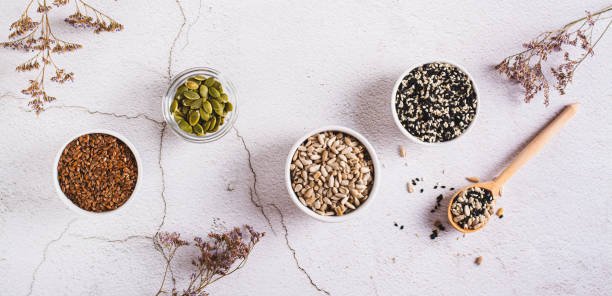
Seed cycling is based on cycling four types of seeds: flax, pumpkin, sesame, and sunflower. Here’s how you can do it.
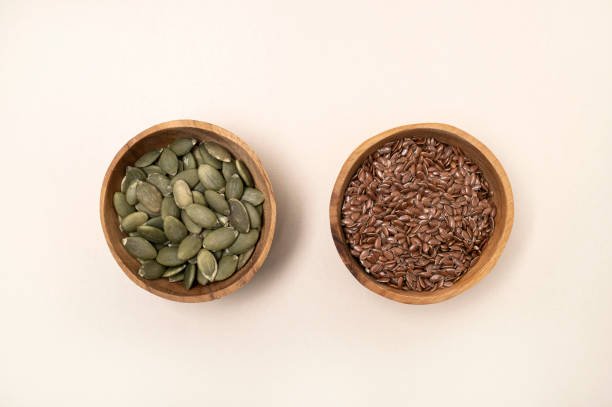
Take Pumpkin Seeds and Flaxseeds During Phase 1 (Days 1 to 14)
In the first half of your menstrual cycle, you eat 1 tablespoon of raw pumpkin seeds and 1 tablespoon of freshly ground flaxseeds each day.
Flaxseeds are the richest known source of lignans. These lignans bind to excess estrogen, so your estrogen levels rise gradually. Pumpkin seeds are an excellent source of zinc. Zinc is an essential mineral for your body to make progesterone during the next phase. Consuming zinc now will stock up your body.
- Take 1 tablespoon of whole pumpkin seeds and 1 tablespoon of fresh ground flaxseeds.
- Add them to your oatmeal, smoothie, or yogurt.
Take Sesame Seeds and Sunflower Seeds During Phase 2 (Days 15 to 28)
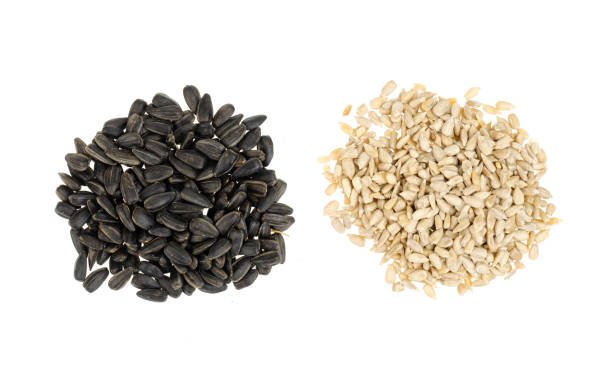
On day 15 after your ovulation, you switch seeds. You eat 1 tablespoon of sesame seeds and 1 tablespoon of sunflower seeds per day until you begin to menstruate.
Sesame seeds are rich in lignans to block additional estrogen. But more importantly, sunflower seeds are rich in selenium and vitamin E. Selenium is an essential mineral needed to convert inactive thyroid hormone (T4) to active thyroid hormone (T3) in your liver.
Your thyroid controls your metabolism, and you need a healthy thyroid to make progesterone. Vitamin E is known to increase progesterone.
- Take 1 tablespoon each of ground sesame seeds and raw sunflower seeds.
- Mix them in with a salad, soup, or snack.
What to do If Your Cycle Isn’t Regular?
If you don’t have a 28-day cycle or have irregular periods, that’s ok. Other women have the same experience, and you can still do seed cycling.
Rather than counting your cycle, use a 14-day cycle method:
- Week 1 & 2: 1 tablespoon Flaxseed and pumpkin seeds
- Next 2 weeks: 1 tablespoon Sunflower seeds and sesame seeds
You must repeat this seed rotation continuously. This approach provides your body with a steady flow of nutrients. Thus, it helps restore your hormonal balance.
Likewise, if you have PCOS, amenorrhea (missing periods), or are experiencing menopause, you don’t need to track your cycle as your hormones aren’t following a regular cycle.
You can just do seed cycling by following the above 14-day rotation method.
Does Seed Cycling Actually Work?
It may be beneficial, but it is not scientifically proven to treat hormone issues.
There is no compelling evidence that seed cycling itself regulates menstruation, or treats polycystic ovary syndrome (PCOS), infertility, or hormone imbalance. Most studies have not tested seed cycling as a full method.
But it certainly works for some women. because the seeds involved in this protocol are highly nutritious. Food can support your hormones, but testing helps you understand what your body needs. Our women’s health services can help.
Mostly women with hormone imbalances are low in zinc, magnesium, selenium, and Omega-3s. Seed cycling is a perfect way of correcting these deficiencies.
What Seed Cycling WORKS for:
- Reducing PMS symptoms.
- Reducing hormonal acne.
- Shortening heavy periods.
- Easing your transition into perimenopause.
What Seed Cycling DOES NOT work for:
- It will not fix underlying thyroid disorders, but it can greatly manage your thyroid function.
- It will not overnight cure severe PCOS.
- It will not replace medical treatment if you have a diagnosed hormonal condition, such as endometriosis.
How to Do Seed Cycling the Right Way?
- Buy them whole: Once the shell is cracked, the seeds are very likely to go rancid. If you purchase them in their ground form, they’re likely rancid and depleted of their nutrients. Look for raw, organic, whole seeds. And fresh-grind them daily in a coffee grinder or blender. It will take you 30 seconds.
- Store them properly: Store your whole seeds in an airtight glass container in the fridge or freezer to maintain the healthy fats.
- Don’t cook them: Cooking will destroy the sensitive Omega-3s and vitamins. Use your freshly ground seeds in cold or room temperature food.
- Eat them right: Add them to a smoothie, stir them into oatmeal or yogurt, or applesauce, or sprinkle on top of a salad. If you can’t stand the texture, dissolve the powder in a little water and take it like a pill.
- Be consistent: It takes 3 months for your cycle to turn over. Do this every day for at least 3 cycles before concluding if it’s helping or not.
Conclusion
Seed cycling may take some time to work. Be prepared to use it every day for at least three months to see the real benefits. You can keep a simple diary to monitor your symptoms each month to identify the real results.
Seed cycling for hormones works, but you don’t have to follow it for the rest of your life. Once your hormones are balanced and your symptoms subside, you can either choose to keep doing it or simply follow a healthy diet.
But sometimes hormone imbalances are caused by underlying conditions that can’t be treated with food. If you have severe symptoms, it is important to consult a doctor to measure your hormone levels and get a diagnosis.
At Kairos Health and Wellness in Texas, we do just that. One of our functional nurse practitioners, Lola, uses functional medicine testing to dig deep into your full hormone panels, thyroid markers, nutritional status, and build a customized plan to fix it.
If you have any questions or concerns, reach out to us today!