Women’s bodies are run by hormones. Your mood, energy, sleep, weight, skin, libido, fertility, and digestion are all affected by the hormonal changes happening within your body every month. If they get out of whack, life gets that much tougher.
Progesterone is an important hormone. It’s been estimated that 75 percent of women have some hormone imbalance during their childbearing years. Low progesterone is one of the most common. It occurs in teens, in the 20s and 30s, and in women in the years before menopause. It gets worse as you age, in times of stress, and after several years of birth control pills.
And it causes a long list of low progesterone symptoms that women may not realize are all related to the same cause.
What Exactly Is Progesterone?
Progesterone is a steroid hormone that’s produced in the ovaries after ovulation. Every month, after an egg is released, the remaining follicle, the corpus luteum, produces progesterone. It’s the hormone responsible for the second half of your cycle, called the luteal phase.
Progesterone is more than just a hormone to get your uterus ready for pregnancy. It’s a widespread hormone that affects your brain, bones, gastrointestinal tract, thyroid, and immune system. When your progesterone is high, you are relaxed, feel good, can sleep, manage stress, and have an uneventful cycle. When it drops, everything changes.
Progesterone counterbalances estrogen. They are opposing hormones, and when progesterone becomes low in comparison to estrogen, the condition of estrogen dominance occurs. You don’t need to have high estrogen for this to occur. You simply need low progesterone.
In a world of high stress, low sleep, high toxins, and years of hormonal birth control, low progesterone is very common these days.
What Causes Low Progesterone?
Low Progesterone occurs due to the following causes:
Stress: If you are chronically stressed, your body will make more cortisol because cortisol is the stress hormone.
No Ovulation: Progesterone is only produced in large quantities after ovulation. If you are not ovulating due to PCOS, excessive exercise, under-nutrition, thyroid problems, or perimenopause, your progesterone levels will be very low, despite having a period.
Nutritional Deficiencies: Progesterone is made from cholesterol and requires zinc, vitamin B6, vitamin C, and magnesium for its synthesis and for the corpus luteum to work. Women may have deficiencies in any of these, especially if they have poor nutrition, stress, and illness.
High Estrogen: If you have high estrogen, it makes the estrogen-to-progesterone ratio more severe, even if your progesterone level is normal. This effect is the same as having low progesterone.
Long-Term Use of Hormonal Birth Control: Hormonal birth control stops ovulation. After prolonged use, some women report that after ceasing to use the birth control, their progesterone levels do not return to normal without intervention.
Low Progesterone Symptoms in Women
If you have any of the following symptoms, chances are you have low progesterone.
1. Sudden Anxiety
Progesterone helps to calm your nervous system. It does this by stimulating GABA receptors
GABA is the chemical that allows your brain to relax, calm down, and feel secure. When progesterone levels fall, GABA levels fall. It makes your nervous system more sensitive and slower to calm down.
This results in spontaneous anxiety. This happens most often in the two weeks before your period, when progesterone levels should be highest.
2. Irregular Cycles
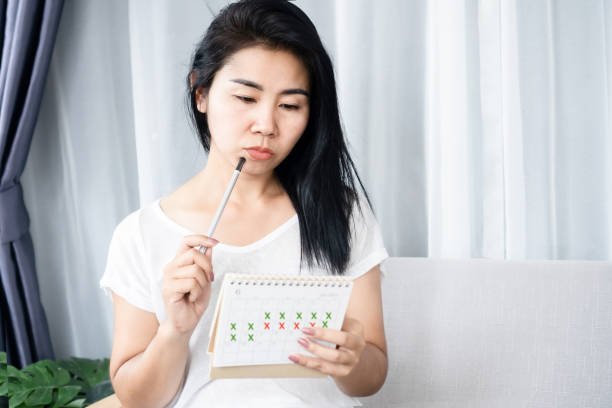
Your cycle should be between 24-35 days. The luteal phase is the time from ovulation to the start of the next period and lasts at least 10 to 14 days. at least
When progesterone is low, the luteal phase shortens. Your period arrives early, before day 21. Or much sooner than you normally expect it. Short cycles are one of the common symptoms of a luteal phase defect due to low progesterone.
3. Spotting Before Your Period
Premenstrual spotting or light bleeding (brown discharge) is another sign of low progesterone.
Progesterone maintains your uterine lining throughout your luteal phase. If you have brown discharge one to five days before your period for a regular number of days, your progesterone is probably low during your cycle.
4. Heavy Periods
When your progesterone is low, estrogen will thicken the lining of the uterus.
This will cause heavier flow and stronger menstrual cramps. In the long run, it will cause iron-deficiency anemia and fatigue.
5. Breast Tenderness
Estrogen stimulates your breast tissue growth, and progesterone opposes that effect.
If your progesterone is low, you experience breast tenderness, swelling, or lumpiness the week before your period.
For many, this breast pain becomes so severe that they can’t wear a bra. This is nearly always due to a hormone imbalance, and low progesterone is the most common.
6. Infertility and Recurrent Early Miscarriages
Progesterone seals your uterine lining to protect your fertilized egg. If your levels drop too early following ovulation, your egg won’t implant. If it does implant but progesterone levels fall, you can have a miscarriage.
7. Sleep Problems Like Insomnia
Progesterone is a sleep-inducing hormone. It slightly raises your temperature and promotes deep sleep.
But low progesterone interferes with your sleep. With low progesterone, you may wake up between 2-4 AM with thoughts racing. Or you may have difficulty falling asleep despite being tired.
If you’re normally a good sleeper and have suddenly started to wake up in the second half of your cycle, it is probably due to low progesterone.
8. Difficult Weight Gain and Bloating
Low progesterone can also slow your thyroid function and cause water retention in your body.
This is why you can gain 3-5 pounds of water weight in the week before your period. This will also cause terrible bloating and gas.
9. Hormonal Headaches and Migraines
If you have low progesterone during the late luteal phase, this can cause hormonal headaches and migraines.
If you get headaches in the week or so before your period, or at ovulation, they are almost certainly hormonal headaches.
10. Poor Bone Health
Progesterone hormone is well known to stimulate the osteoblasts, cells that build bone. While estrogen only prevents the cells (osteoclasts) from breaking down bone.
Having low progesterone for a long period of time means you no longer build new bone, making you more susceptible to osteopenia and osteoporosis during perimenopause (when progesterone levels begin to drop).
How Is Low Progesterone Diagnosed?
You can check your levels with a blood progesterone test. However the timing of this test is critical, and here’s where most testing goes wrong for women. You need to test on the 21st day of your cycle
For women with longer or shorter cycles, the test should be performed seven days after ovulation.
Many women have been told they have normal hormone levels when their test was done too early or too late. They were told their hormones are normal, and went away thinking they’re healthy.
What to test:
- The DUTCH (Dried Urine Test for Comprehensive Hormones) test is the best. This is a 24-hour urine test for progesterone and its metabolites.
- Day 21 or 7 days after ovulation (ovulation confirmed by an ovulation test)
- Estradiol to measure the estrogen to progesterone ratio
- FSH and LH for ovulatory function
- Complete thyroid panel (TSH, free T3, free T4, TPO antibodies)
- DHEA-S and testosterone if symptoms of excess androgens
- Micronutrients such as zinc, B6, magnesium and vitamin D
How to Fix Low Progesterone Naturally
Here are some of the scientifically proven ways to fix low progesterone symptoms naturally:
1. Lower Your Stress Level
This is the most crucial. You need to reduce your cortisol levels. This includes saying no to caffeine after 12pm, and 7-8 hours sleep. You also need to do breathing exercises, walk and take magnesium baths.

2. Help your Ovulation
If you don’t ovulate, it means you don’t get progesterone. The most reliable way to know if you are ovulating is to track your basal body temperature, use ovulation predictor kits (OPKs), or check your cervical mucus.
3. Eat to Balance Your Blood Sugar
You must avoid having breakfast that is just a carbohydrate, such as a banana and a bagel. Every meal you eat should have quality protein, fat and fibre to balance your insulin.
Severe calorie restriction, excessive intermittent fasting or very low carbohydrate diets suppress your progesterone.
4. Eat Enough Zinc
Zinc is critical to follicle maturation, ovulation and corpus luteum activity. It’s needed for adequate progesterone production in the luteal phase.
You can add oysters, red meat, pumpkin seeds and eggs to your diet today as good sources of zinc. Your health care provider may prescribe a supplement if you have low levels.
5. Eat Enough Vitamin B6
Vitamin B6 is great to support your corpus luteum and progesterone. Clinical studies have shown it to alleviate PMS and be very beneficial in the luteal phase. Chicken, salmon, bananas and sweet potato are good sources of it. Taking 50-100mg supplement during the luteal phase is a successful strategy to manage your low progesterone symptoms.
6. Eat Enough Vitamin C
Vitamin C is highly abundant in the corpus luteum. It has been shown that 750mg of vitamin C per day will increase mid-luteal progesterone levels.
This is another one of the best ways to treat your low progesterone symptoms.
7. Seed Cycling
Seed cycling is eating seeds during a certain time of your cycle. You can consume pumpkin/flax in the first half of the cycle and sunflower/sesame in the second.
This practice gives you exactly the zinc, selenium and lignans you need to help your optimal ovulation and progesterone secretion over time.
It’s an easy, dietary protocol with profound cumulative effects over time.
Read our full seed cycling article here to understand it fully.
The Bottom Line
Low progesterone is a prevalent condition in women. It’s basically your body’s natural reaction to stress, no ovulation, and poor diet.
By understanding your symptoms, whether they are acute PMS or bone loss over time, and testing at the appropriate time, you can improve your cycle vastly.
At Kairos Health and Wellness in Texas, Lola, one of our functional nurse practitioners, uses functional medicine to address your hormone concerns. We will look at your full hormonal panel, not just the standard panel and create a plan that will address all your specific issues.
Contact us today to see what’s really happening inside.