
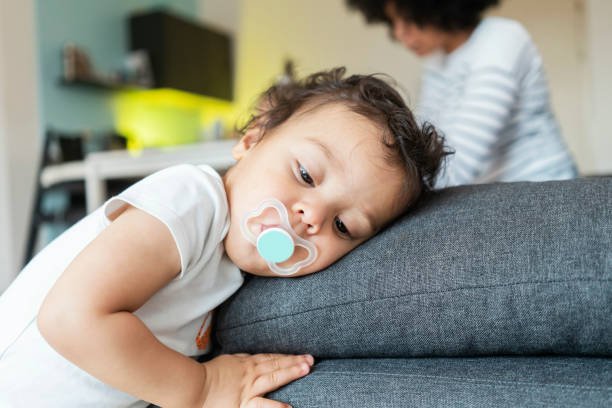
Your toddlers spend almost 40% of their first few years sleeping. During that time, their brain development, immune system, hormone balance, and emotional resilience all get a major boost.
Many studies show that around 1-5% of children may have obstructive sleep disorders. These symptoms usually start appearing in toddler years.
A constant disruption of your child’s sleep can affect their behavior, growth, metabolism, and may even lead to health problems in the long run. Therefore, it is very important for parents and healthcare professionals to quickly recognize and treat sleep apnea in toddlers.
Let’s look at what sleep apnea is, why it happens, and how you can recognize it early in your child.
What Is Sleep Apnea in Toddlers?
Sleep apnea is a disorder in which a child’s breathing is interrupted and resumed several times during sleep. This disorder occurs when your toddler’s upper airway is blocked or narrowed in the course of sleep. With this disorder, breathing can stop for a short time and then start many times throughout the night. This can cause a child to wake up frequently at night.
In younger children, this is mainly obstructive sleep apnea (OSA), which means the airflow is blocked physically, even though the body is attempting to breathe. Since toddlers cannot express their feelings, the problem goes unnoticed in many cases.
Sleep apnea in toddlers looks different from that in adults. A toddler usually means a child from 1 to 3 years old. Sleep apnea can happen at any age, but if we talk about “sleep apnea in toddlers, ” we mean kids from that age range.
It happens rarely in babies who have structural airway defects. Normally, it is common in children aged 1 to 6 years of age.
How to Know If Your Toddler Has Sleep Apnea
Sleep apnea in toddlers may feel like a detective mission for the parent. Actually, the symptoms of sleep apnea are so mild that instead of experiencing extreme daytime sleepiness, your toddler might exhibit sleep disturbances and behavior changes most of the time.
In order to be a parent, it is crucial to observe the following types of patterns in their children when they are asleep and during the daytime.
- Your child snores more than 3 nights per week
- The snoring is so loud that it can be heard from another room
- You see your toddler stop breathing for a few seconds, followed by gasping, choking, or snorting sounds
- The chest pulls inward during breathing
- Your child sleeps with their mouth open regularly
- Lips are dry in the morning
- Mouth breathing instead of nasal breathing
- Strange sleep postures, like neck extended backward to breathe
- Sweating at night, even if the room is cool
- Teeth grinding (bruxism)
- Get headaches in the morning.
- Bedwetting is common, especially if it’s combined with snoring
As per pediatric sleep studies, untreated sleep apnea in toddlers can exhibit behaviors that mostly correspond to ADHD, learning disabilities, and mood disorders, whereas the actual cause can be a sleep problem.
Common Causes of Sleep Apnea in Children
The reasons behind sleep apnea in kids are quite different from those in adults. Some of the main reasons for childhood OSA are:
- Enlarged Tonsils and Adenoids: This is the #1 reason for children between 2-6 years old. Tonsils and adenoids are located at the back of the throat. In young children, the airways are naturally bigger than the airway size.
- Anatomical Airway Differences. Some kids can have different airway shapes due to their birth, like a small lower jaw, a narrow upper jaw, a large tongue relative to mouth size, and craniofacial syndromes. This can be a cause of sleep apnea in toddlers.
- Obesity: For older kids and teenagers, being overweight can increase the chance of having apnea, as obesity can cause more fat around the airway and the neck.
- Nasal Congestion & Allergies: Some prolonged nasal blockage may be a reason for airway collapse. Such causes include allergic rhinitis, chronic sinus infections, or enlarged turbinates.
- Genetic Conditions: Some genetic conditions have a strong connection with sleep apnea in toddlers, such as Down syndrome or Pierre Robin sequence.
Is it Dangerous?
Many children initially experience some mild sleep apnea symptoms. But untreated sleep apnea in toddlers may be risky and may impact your child’s:
- Brain development
- Behavioral and learning
- Bladder control
- Growth
- ADHD
- Heart health later in life
- Lungs Conditions
- High blood pressure later in life
- High Cholesterol later in life
A recent NIH study also confirmed that children who suffered from sleep apnea during childhood were almost three times more prone to develop high blood pressure in their teenage years, compared to children who did not.
Most cases, especially those caused by enlarged tonsils and adenoids, are treatable and improves significantly with proper medical care.
How to Help Your Toddler with Sleep Apnea
If you have concerns that a toddler may have obstructive sleep apnea (OSA), you should take them to see a doctor as the very first step. Afterward, your child will be given a referral to a pediatrician or an ear, nose, and throat specialist.
Your doctor may want your child to be monitored overnight, either in the hospital or at home, so they can check the child’s breathing and sleeping patterns. This step is perfect for diagnosing OSA accurately. The treatment mostly depends on the intensity of apnea.
Additionally, you can do the following to help your child:
-
- Calm Routine: Dim the lights, tell a story, and prohibit screen time just before bedtime to help your toddler go to sleep faster.
- Night Observation: You need to occasionally observe your child’s sleeping pattern. Write down the time when your child started to choke or gasp for breath.
- Hydration: Use a humidifier to keep the air in your room moist, and make sure that your child drinks an adequate amount of water so the nasal mucus doesn’t become thick.
- Change sleep posture: It is considered safe to slightly elevate the head around 15 to 30 degrees for toddlers over 2-3 years. Have the child sleep on the side to prevent airway obstruction.
- Soft Mattress: Toddlers should always be laid down on a soft, firm mattress without loose blankets or soft toys.
- Be Prepared for Surgery or CPAP: If recommended, understand the procedure or device, practice mask fitting, and create a routine that makes it easier for your child to adjust.
- Daytime Sleep: If your child seems overtired or irritable during the day, a small, calm nap during the day can be beneficial for you.
- Calm Routine: Dim the lights, tell a story, and prohibit screen time just before bedtime to help your toddler go to sleep faster.
Conclusion
Sometimes toddlers can snore lightly when they have a cold, and it is perfectly normal. But if you notice your child is continuously snoring loudly and there are pauses or gasping, then it is not normal at all.
In case your child suffers from enlarged adenoids and tonsils, the doctor may have to do surgery to remove them. For very severe apnea cases, your doctor might advise the use of a Continuous Positive Airway Pressure (CPAP) machine to help your child breathe more easily during sleep.
At Kairos Health & Wellness in Texas, we use a functional medicine, holistic approach to identify the root causes behind your toddler’s sleep apnea, whether it’s inflammation, gut imbalances, nasal congestion, or breathing habits. Lola, one of our functional nurse practitioners, guides you toward the right treatment to help your toddler sleep better and breathe easier.
Book our appointment today!