
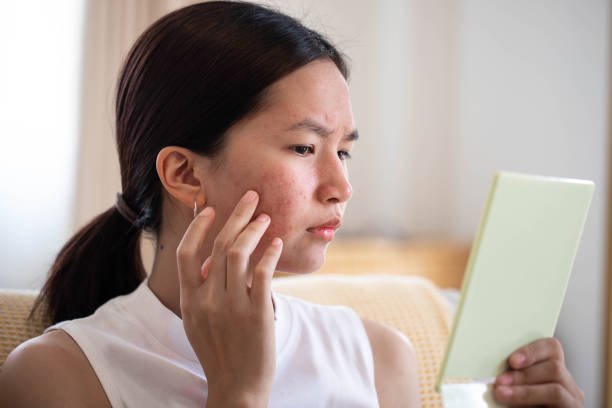
Why is your skin breaking out when you are no longer a teenager? For many adult women, dealing with constant pimples is a deeply frustrating experience.
You buy expensive topical creams, harsh face washes, and spot treatments, only to watch new breakouts form the very next day. These topical products do not work because they only address the surface of your skin.
Your skin is actually an eliminative organ. When your body is dealing with internal inflammation, it uses your pores to push toxins and excess oils out. To stop the breakouts for good, you have to stop looking at your face and start looking at your internal health and hidden adult acne causes.
What is Acne? Pimples, Zits, and What They Mean
A pimple, or a zit, is an inflamed hair follicle. Each hair follicle is attached to a small oil-producing gland, the sebaceous gland, that secretes an oil called sebum. If your sebum glands start to make too much oil, it gets trapped with the dead skin cells and clogs your pores. The bacteria that normally inhabit your skin become trapped inside the plug, grow in numbers, and make the follicle swollen, red, and filled with pus.
Acne in teenagers is caused by the rapid growth hormones, and adult acne is nearly always caused by internal imbalances. Female adults are the most commonly affected, especially in their twenties, thirties, and even into their 40s.
Unlike rosacea and perioral dermatitis, acne is caused by clogged pores that contain sebum, which can worsen with hormonal changes. For adults, the most common lesions include papules, pustules, nodules, and cysts around the jawline, chin, and lower face. This pattern is one of the clearest signs that hormones are involved.
How to Identify Hormonal Acne?
While not all acne in adulthood is hormonal, most of it is. Here’s how to distinguish between them.
Hormonal acne typically looks like this:
- Acne on the sides of the neck, jawline, and chin
- Painful, cyst-like bumps, not blackheads on the surface
- Acne that comes and goes and gets worse just before your period
- Prolonged lesions that do not heal over the course of a day or week
Hormonal acne usually occurs in the following people:
- Women in their 20s, 30s, and 40s
- Women with PCOS
- Women approaching perimenopause
- People who have chronic stress.
- People who have recently stopped hormonal birth control
Hormonal acne is characterized by inflamed and painful cysts, primarily on the lower face, jawline, and chin. It tends to repeat itself and may remain in adulthood. If you have breakouts that follow this pattern, then using topical products will not cure them. It is important to treat the underlying cause of the hormonal imbalance.
Common Adult Acne Causes
1. Blood sugar spikes and insulin resistance
Insulin is one of the most underrated factors of the adult cause of acne. When you increase the intake of refined carbohydrates or sugary foods, your blood sugar rises. Your body releases insulin to bring the sugar down. Insulin stimulates IGF-1 and androgen production, which increases sebum production and inflammation, causing breakouts and worsening acne.
The one that really matters is IGF-1 (insulin-like growth factor 1). Studies link increased levels of IGF-1 in the blood with more intense acne.
This is also why people with PCOS, who have insulin resistance, invariably suffer from acne and weight.
2. Hormonal Fluctuations
Male hormones (androgens) in both men and women encourage the sebaceous glands to secrete more oil. The more oil, the more clogged pores. When more pores are clogged, more breakouts will appear
As women age, estrogen and progesterone levels fluctuate, especially in the week leading up to a menstrual cycle. When estrogen falls too low, it results in estrogen dominance and higher levels of testosterone. The hormonal change is directly related to acne in adults, which can be caused by overactive oil glands.
Some other hormonal triggers include:
- PCOS
- Perimenopause
- Stopping birth control
- Estrogen dominance
3. Gut Health and the Microbiome
Researchers found that acne patients were more likely to experience GI problems than those without acne in a study of 186,591 patients with acne. Toxins can enter your bloodstream if you have an imbalance of good and bad bacteria within your gut, or if your gut is “leaky,” meaning your intestinal wall is damaged.
Your liver will make an effort to remove these toxins, but if it is overwhelmed, the skin will take over and remove the waste. This internal poisoning leads to continual, mild inflammation, resulting in acne on your face.
In addition, antibiotics often used to treat acne can actually make the problem worse in the long run, creating a vicious cycle that makes it difficult to clear up the acne. A gut restoration protocol might be needed before skin improvement if history of antibiotic use.
4. Chronic Stress and High Cortisol
Cortisol might be the culprit if you’ve ever experienced acne outbreaks over an especially stressful week at work.
Your body releases excess cortisol when you’re stressed for an extended period of time. Cortisol is very inflammatory, and it directly triggers your sebaceous glands to make more oil, so your acne bacteria have the right conditions to grow.
5. Nutrient Deficiencies
You require particular raw materials for clear skin. Zinc (which regulates oil production and fights bacteria), Vitamin A (which regulates the turnover of skin cells), and Omega-3 fatty acids (which reduce systemic inflammation) are all among the root causes of adult acne.
6. The Wrong Skincare Products
This one may be external, but it is a common trigger for acne in adults, even when there are internal factors. Numerous cosmetic and skin care products have ingredients that lead to clogged pores.
This means that they clog pores. Some silicones, heavy oils, isopropyl myristate, and some sunscreens are common culprits. Only non-comedogenic products should be used, and ingredients should be checked on labels and cross-referenced. Use a non-abrasive, pH-balanced cleanser twice a day for most of the day.
Why All of a Sudden Am I Breaking Out?
If you are wondering why you suddenly have acne, and you’ve been acne-free for years, these are the most common causes:
- Stopping birth control
- Entering Perimenopause
- New medications
- New protein powders and supplements
- Chronic stress
- Traveling or moving
- Touching your face more
- New medications
How to Prevent Pimples and Zits
If you want to get rid of your skin problems, you must treat your body from the inside. These are ways to address the root causes:
1. Balance Your Blood Sugar
In order to avoid the formation of zits in the first place, you need to avoid foods that raise insulin levels. Try to eliminate white bread, pasta, sugary beverages, and too much dairy. Swap them for high-protein foods, healthy fats, and fiber. This helps the blood sugar levels to remain stable, and the insulin doesn’t rise, and the androgens don’t stimulate the production of oil.
2. Get Tested
It is best to go for a full hormone panel test including estrogen, progesterone, testosterone, DHEA-S, SHBG, fasting insulin, and IGF-1. This can identify the hidden hormonal imbalance.
2. Heal Your Liver and Gut
To get rid of hormonal acne, you must help your body eliminate excess hormones through your digestive tract instead of through your skin.
To do that, include a lot of fiber in your diet, as found in vegetables such as broccoli, spinach, and Brussels sprouts. Fiber binds to excess estrogen in your digestive tract and carries it out of your body in your stool before it can be reabsorbed.
3. Use Targeted Supplements Instead of Harsh Topicals
Don’t burn your skin with strong chemicals; rather, heal the internal deficiency. Zinc Picolinate (15- 30 mg per day) helps decrease oil production and helps to kill the acne bacteria.
DIM (Diindolylmethane) is a supplement derived from cruciferous vegetables that helps your liver safely process and excrete excess estrogen. DIM is commonly used in functional medicine in the treatment of hormonal acne.
4. Change Your Topical Strategy
Don’t wash your face too frequently. Stripping your skin of all oil actually causes your sebaceous glands to panic and produce more oil instead. The best way is to wash your face twice a day with a non-comedogenic cleanser.
Try topical products that contain salicylic acid, which will work to clear the blockage in the pore, but won’t break down the skin barrier. Plus, if you live in a humid environment such as Texas, the extra moisture in the air can cause sweat and oil to clog your pores. So, use a good light moisturizer that is oil-free to avoid this.
5. Fix your Lifestyle
Go to sleep and get up at the same time each day and aim to get 7 – 9 hours of sleep. During deep sleep, growth hormone, a molecule that repairs skin, is at its highest.
The whole hormonal acne process is controlled by cortisol. A skin intervention is a daily practice for reducing stress through breathwork, meditation, yoga, or spending time in nature.
You should do regular moderate exercise. This helps to decrease insulin resistance, decrease cortisol over time, and aids in lymphatic drainage that removes metabolic waste products from the skin.
Bottom Line
Adult acne is a biological warning sign that your internal systems are out of balance. All those harsh creams you use will only compromise the skin barrier. Your healthy skin indeed comes from within.
At Kairos Health & Wellness, Lola, one of our functional health providers, will run the exact lab work needed to find adult acne causes and build a personalized, easy-to-follow plan to heal your gut and balance your hormones properly.
Don’t waste time on topical products and begin to treat the real cause of the problem.