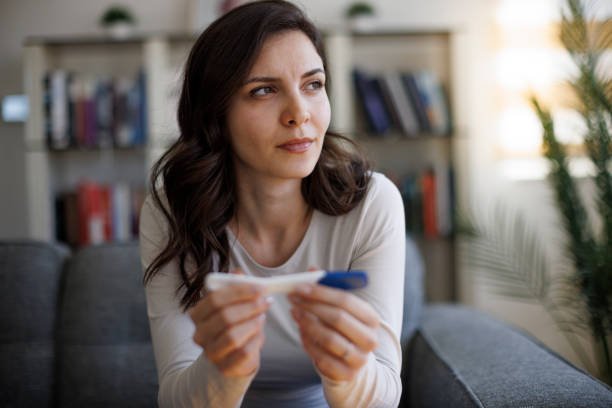
As you age, it is common for women to believe that their fertility is over and they are no longer at risk for becoming pregnant. This is not always the case. This misbelief can sometimes lead to an unplanned pregnancy.
There is often a great misunderstanding about perimenopause. One of the most common questions we are asked is, “Can you get pregnant during perimenopause?” The answer is yes. Your irregular periods do not necessarily mean that you cannot become pregnant.
Perimenopause is the period of time before menopause, usually occurring between the ages of late 30s to early 40s. In some instances, it can occur at an early age. During perimenopause, your ovaries will begin to produce less estrogen and progesterone, causing your menstrual cycles to become irregular. This does not always mean that ovulation will not occur.
Perimenopause and Pregnancy
Perimenopause is a stage lasting 4 to 10 years, where your hormone levels, such as estrogen and progesterone, change drastically.
Your estrogen and progesterone levels are no longer regular, and this influences your ovulation. There are months you may ovulate, and months you may not.
This abnormal ovulation is the most important factor, making it possible to get pregnant.
Your ovaries may still release eggs occasionally. The timing is unpredictable, which increases the chances of an unplanned pregnancy if contraception is not used.
One thing to note is that fertility rates start to decrease at the age of 38, and a healthy woman has an approximate 15-20 percent chance of getting pregnant every month.
And at 42 years of age, your fertility levels decline significantly, but it is not completely zero. Actually, women at early 40s still have a little yet valid possibility of a natural pregnancy. That is why your doctors usually recommend the continuation of contraception until menopause has been established.
Signs You Are Still Fertile
It is not always easy to know if you are still fertile during perimenopause. Below are some signs that your body is still ovulating:
- Still have periods, though they are not regular
- Your cervical mucus is still present, looking clear, stretchy, and egg white-like
- Mild ovulation pain, where you feel a twinge or cramp on one side of your lower abdomen during ovulation
- Breast enlargement or tenderness
- Peak sex drive during ovulation
When you miss 12 months of menstruation, your doctor tends to confirm that it is menopause. Even up to that point, there is still a chance of pregnancy.
If you’re unsure what these changes mean for you, our Women’s Health services can help you make sense of them.
Risks of Pregnancy During Perimenopause
Yes, pregnancy is possible in perimenopause, but there are risks associated with pregnancy in old age. As you age, both maternal and fetal risks can be higher.
It is possible that there can be an increased risk of Miscarriage due to the age-related growth of chromosomal abnormalities in eggs. At age 40, the risk of miscarriage for each pregnancy is around 40 to 50%. Even if pregnancy happens, there is a much higher risk of early pregnancy loss.
Also, an old age pregnancy can cause many Genetic Disorders. This is because eggs tend to get chromosomal disorders as a person ages, leading to Down Syndrome or other genetic disorders.
Some of the other risks associated with pregnancy in old age include:
- Gestational diabetes and high blood pressure
- Risk of preterm birth
- Issues with the placenta
- Low birth weight
- C-section delivery
- Maternal Health Considerations
Do You Still Need Birth Control in Perimenopause?
The most significant thing to note is that you should not stop using contraception too early. This is because, at times, you stop using contraceptive measures, thinking you are no longer fertile, which may cause an unexpected pregnancy.
According to studies, it is estimated that about 15% of pregnancies that occur in women aged over 40 are unintended. In perimenopausal pregnancy, there are increased risks such as miscarriage, gestational diabetes, preterm birth, and chromosomal abnormality. These complications can be prevented by stopping unwanted pregnancies.
Typically, your Healthcare provider would advise the use of contraception until the menopause is confirmed. You can go for hormonal Options, non-Hormonal options, or tubal ligation, depending on your preference. The choice completely depends on your preferences and symptoms.
There are also some contraceptive options, such as low-dose hormones, that can assist with your perimenopause symptoms. Most OB-GYNs agree that it is best to keep using contraception pills until at least 12 months after your last period.
When to discuss with your health care provider
When you are not certain about your fertility status or even have doubts about pregnancy during perimenopause, it is advisable to refer to a professional. You need particular advice, in particular, when:
- You do not want to get pregnant and are not sure about contraceptives.
- You are trying to conceive later in life
- You have irregular or unusual bleeding
- Other perimenopause symptoms have an impact on your quality of life.
It is significant that each hormonal transition of a woman is unique, and, therefore, a personal approach is vital.
Conclusion
Can You Get Pregnant During Perimenopause? Yes, you can still conceive since ovulation may happen even when your cycles are irregular. Though fertility decays, it does not entirely cease until the point of menopause.
That is why it is necessary to keep informed, watch your cycles, and use suitable contraception in case you are not planning to be pregnant. Meanwhile, in case you are attempting a conception, some early guidance and encouragement can pay off.
Perimenopause is a complicated and yet treatable stage. It is something that you can go through without any hesitation or ambiguity with the right care.
Book your appointment today with Kairos Health and Wellness!