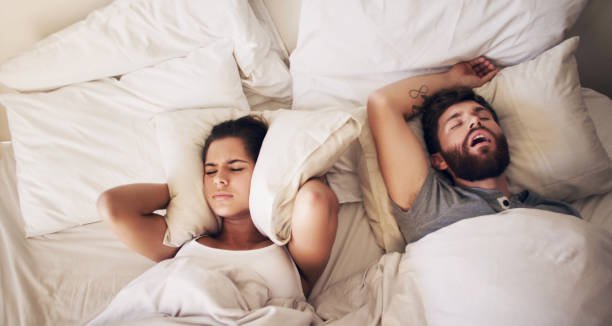
Snoring is one of such things that people learn to live with. Snores occur quite frequently with almost everyone and about 25-50 percent of the adult population snores regularly. And, it is a completely normal phenomenon.
However, chronic snoring can put you at risk of some health issues such as high blood pressure, heart attack and stroke.
Snoring and sleep apnea are not the same condition. In fact, snoring may occur at any age and because of a lot of simple reasons such as nasal congestion, alcohol, some drugs, or position during sleep.
Snoring Vs Sleep Apnea
Snoring refers to the rough or scratchy sound that occurs when the flow of air is obstructed partially when one is asleep. As your muscles in the throat relax, tissues vibrate as air moves past them.
For some individuals, snoring could happen from time to time and become worse during conditions like allergies, congestion, alcohol, or sleeping flat on their back.
Sleep apnea is a term used to describe a condition whereby you stop breathing when you are asleep. Sleep apnea can be of two kinds namely obstructive and central.
The most common one is obstruction sleep apnea (OSA), whereby the sleeper experiences several involuntary breathing pauses occurring at intervals, perhaps 20 to 30 times per hour of sleep. At such pauses, the sleeper does not breathe.
This is due to either collapsed tissue around the neck or naturally small airway.
Yes, snoring is a common symptom of sleep apnea. When your snoring is loud, regular, and you are gagging, choking, or your breathing has stopped, then it could be that you are experiencing sleep apnea. It is best to discuss these symptoms with your healthcare provider.
Symptoms of Snoring Linked to Apnea
Snoring is not necessarily an indicator of sleep apnea but this is a wakeup call when it is accompanied with unrefreshing sleep as well as some of the following symptoms such as:
- Pauses In Breathing
- Choking
- Gasping
- Loud Snoring
- Daytime sleepiness
- Poor Focus
- Tossing and turning during sleep
- Feeling moody
- Morning headaches
- Sore throat upon awakening
- Dry mouth
- Restless sleep
In children with sleep apnea, you will see symptoms like poor attention span, hyperactivity, aggression, and behavioral problems. Snoring is common in people with OSA, and is one of the most prominent clinical symptoms of sleep apnea, depending on the severity and frequency.
Can Snoring Occur Without Sleep Apnea
Snoring and sleep apnea are closely related, but they are not the same condition. Studies indicate that approximately half of people who snore intensively have obstructive sleep apnea while the other half do not.
Snoring may happen in case of primary snoring, upper airway resistance syndrome, or in OSA and central sleep apnea, and other medical conditions.
One of the studies also indicated that those who snore loudly have normal sleep studies without significant sleep apneas.
It means that snoring is one of the symptoms of OSA, but it cannot be confirmed or excluded without additional objective tests, such as polysomnography sleep study.
If You Snore, Get Tested For Sleep Apnea
Neglecting snoring completely is not a good idea especially when snoring and sleep apnea symptoms overlap, such as daytime fatigue, morning headaches, poor concentration, mood changes, or high blood pressure.
If you experience snoring, it is good to have the test done before the condition worsens.
At Kairos, we perform sleep apnea diagnosis through home sleep studies or in-center studies. In-home sleep study is where you sleep with a small monitor at home. There are a few different kinds of monitors used for monitoring your breathing and oxygen levels at night.
The in-lab tests are much more sensitive and will be done in order to further diagnose your sleep apnea. At-home tests can miss mild and moderate sleep apnea symptoms.
This is why it’s necessary to understand that if you have not come up with sleep apnea from the at-home test, you will have to follow up with the in-lab test.

Practical Tips to deal with Snoring and Sleep Apnea
If snoring is affecting your sleep-or raising red flags about sleep apnea-here are some steps you can try at home. These strategies may help but it is always best to check with a doctor to rule out underlying conditions like obstructive sleep apnea:
- Avoid drinking alcohol particularly near bedtime
- Stop smoking as it irritates and inflames your airway
- Sleep on your side, not on your back, to avoid the airway from collapsing
- Try special oral and throat exercises that involve singing or doing oral exercises
- If advised by the doctor or dentist, use an anti-snoring mouthpiece or oral appliance
- Observe your sleep pattern and how you feel during the day
- Ask your partner to monitor for nocturnal pauses, gasps, and choking sounds
- Consider a sleep study to get the right diagnosis behind your snoring
- If you have been diagnosed with OSA, follow your providers’ directions for CPAP therapy.
Conclusion
Regarding the question “is snoring a sign of sleep apnea,” the answer is that it could be, but it is not always so. When your snoring is loud, along with other symptoms of tiredness during the day, headaches upon waking, as well as pauses in breathing during your sleep, it may be a sign that you have sleep apnea.
If you or a loved one are wondering whether your snoring might be impacting your health, then we encourage you to take the first step and reach out to us. Lola, one of our functional nurse practitioners, looks at your sleep quality, breathing patterns, nasal health, daytime energy and cognitive clarity.